In this guide ▾
Vatican C is a short, incomplete search phrase, and in almost every case it points to Vatican City, the walled city-state in the middle of Rome. I’ll treat it that way here. This page explains what the place is, who runs it, what is inside it, and how to plan a visit without wasting a morning in the wrong line.
The short version is simple. It is the smallest country in the world, it is ruled by the pope, and most visitors come for three things: St. Peter’s Basilica, the Vatican Museums and the Sistine Chapel. If you only want tickets, jump to the booking section. If you want the background first, read on.
What does Vatican C mean?
Vatican C most likely stands for Vatican City, although it could also begin a longer phrase such as “Vatican chapel” or “Vatican church.” Since the keyword is cut short, I’d read it as a question about the state itself.
Wikipedia gives the full name as the Vatican City State, a landlocked sovereign city-state in Southern Europe. The same article says the name was first used in the Lateran Treaty of 1929, and that “Vatican” comes from an Etruscan settlement called Vatica or Vaticum. The Italian name is Città del Vaticano, and the Latin name, used in official church documents, is Status Civitatis Vaticanae.
If you meant the Sistine Chapel or a church, the sections below cover those too. For a deeper look at the Church side of the state, my guide to the Catholic Church in Vatican City goes into the structure.
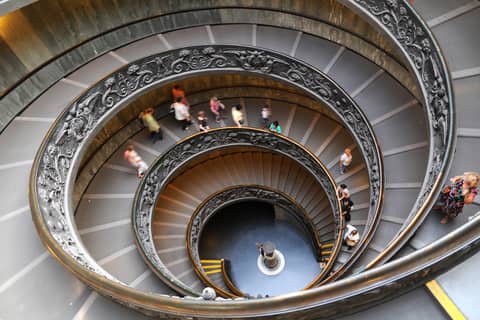 Want a closer look? Vatican: Museums & Sistine Chapel Entrance Ticket, from $36See times →
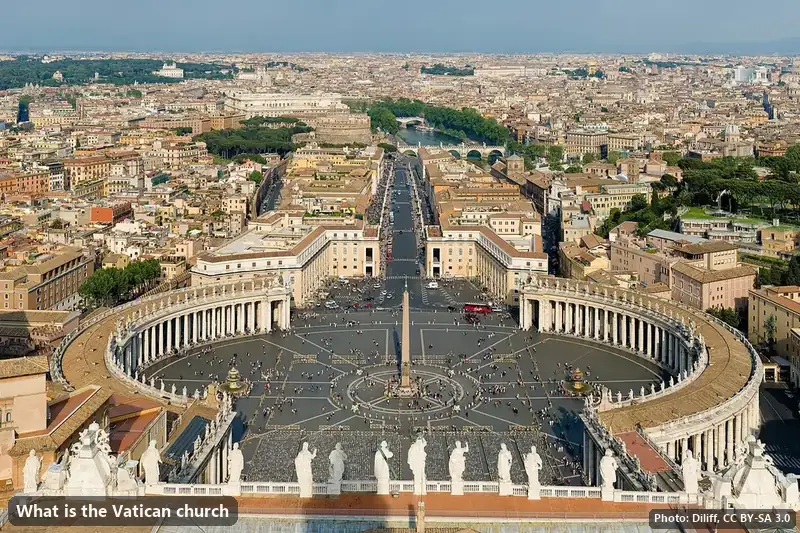
Where is Vatican City located?
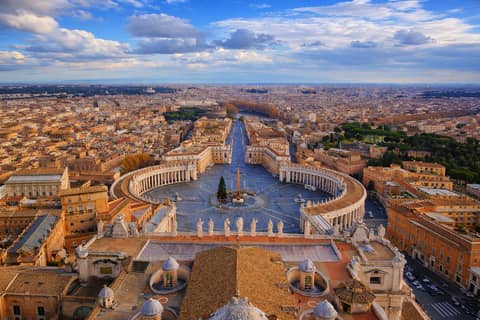
Vatican City is located inside Rome, Italy, on the west bank of the Tiber River. As an enclave, it is surrounded entirely by Italian territory. Wikidata gives the coordinates as 41.90400, 12.45300.
 Book aheadVatican: Museums & Sistine Chapel Entrance TicketCheck availability · from $36
You do not need a flight or a border crossing to get in. You walk from Rome across St. Peter’s Square, or you enter the museum complex from Viale Vaticano. The Vatican Museums and the Sistine Chapel share one entrance on the north side, while the basilica faces the square on the east side. The two entrances are a real walk apart, so don’t plan to hop between them in five minutes.
Vatican Museums
Art museum · ★ 4.6 · 213,480 Google reviews
00120 Città del Vaticano, Vatican City
Opening hours
- Friday8 am–8 pm
- Monday8 am–8 pm
- Saturday8 am–8 pm
- SundayClosed
- Thursday8 am–8 pm
- Tuesday8 am–8 pm
- Wednesday8 am–8 pm
Saint Peter’s Basilica
Basilica · ★ 4.8 · 185,703 Google reviews
Piazza San Pietro, 00120 Città del Vaticano, Vatican City
Opening hours
- Friday7 am–7:10 pm
- Monday7 am–7:10 pm
- Saturday7 am–7:10 pm
- Sunday7 am–7:10 pm
- Thursday7 am–7:10 pm
- Tuesday7 am–7:10 pm
- Wednesday7 am–7:10 pm
Wikipedia notes that the region was once called the Ager Vaticanus, a marshy area on the west bank of the Tiber that the Romans considered dismal. The modern state began on a much firmer footing in 1929.
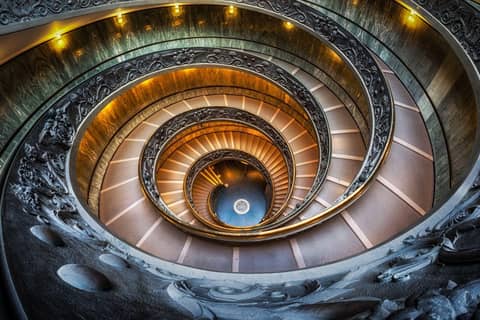 Skip the ticket line: Vatican Museums, Sistine Chapel & St. Peter's Basilica Tour, from $60Check dates →
Is Vatican City a country?
Vatican City is a country, a sovereign state that is both the smallest by area and the least populous. Wikipedia says the Holy See maintains diplomatic relations with 180 states and is an observer state of the United Nations.
The Holy See and Vatican City are related but not identical. Wikipedia explains that the state is governed by the Holy See, the central authority of the Catholic Church worldwide, which is itself a sovereign entity under international law. In practice, the Holy See runs diplomacy and church affairs, while the city-state is the territory it governs. I wrote a separate explainer on the Holy See and Vatican City if you want to see how the two differ.
The state also behaves like a normal European neighbor in daily life. It uses the euro, issues its own euro coins and is a de facto member of the Schengen Area, according to the same source.
“Vatican City, officially the Vatican City State, is a landlocked sovereign city-state in Southern Europe.”
 Short on time? Rome: Vatican Museums, Sistine Chapel & Basilica Tour, from $71Book a slot →
Is the Vatican a republic?
The Vatican is not a republic; it is an absolute monarchy under the pope, who is elected by the College of Cardinals through conclaves. The pope delegates authority to the Pontifical Commission for Vatican City State, which acts as the state’s legislative body.
Wikidata lists the current head of state as Leo XIV and the head of government as Raffaella Petrini. The Prefecture of the Papal Household, described on the official Vatican site, organizes papal ceremonies, audiences and the visits of heads of state. That office is why a state visit looks so formal on the steps of the Apostolic Palace.
If you hope to see the pope in person, the Prefecture is the office that arranges public audiences. Check the official calendar before you travel, since dates change.
 Prefer a guide? Rome: Vatican Museums & Sistine Chapel Skip-The-Line Ticket, from $32See tours →
The city-state by the numbers
The city-state by the numbers looks tiny, and the figures prove it. They come from Wikidata, the structured database behind the Wikipedia article.
- Area: 0.44 km². Wikidata lists 0.44 square kilometers, while the Wikipedia text gives 0.49. Either way, it is smaller than most city parks, so a visit is about queues and galleries rather than distance.
- Population: 949 (2024). Fewer than a thousand people live here, which is why it is the least populous country.
- Founded: February 11, 1929. That is the date of the Lateran Treaty, which settled the long dispute with Italy.
- Heritage status: World Heritage Site. The designation covers the basilica, the museums and the chapel, so the whole state counts as protected heritage.
- Currency: euro. You pay with the same cash and cards you use in Rome.
- Official languages: Italian and Latin. Signs in the museums are multilingual, so you will manage in English.
- Time zone: Central European Time (UTC+01:00). Set your watch to Rome time for your slot.
The population figure is worth a second look. Wikipedia’s article text says about 882, while the Wikidata record shows 949 for 2024. Different counts use different dates, so treat any number as approximate.
 Planning ahead? Vatican Museums & Sistine Chapel Skip-the-Line Entry Ticket, from $53Check availability →
What is inside the walls of the Vatican?
Inside the walls of the Vatican you will find three sights almost every visitor wants, plus the buildings that run the Church. Wikipedia lists St. Peter’s Basilica, the Sistine Chapel, the Apostolic Palace, the Vatican Library and the Vatican Museums as the main sites.
| Site | What it is | How you enter |
|---|---|---|
| St. Peter’s Basilica | Central church of Catholicism, built over the tomb of Saint Peter | Faces the square; free entry, but crowd control can limit access |
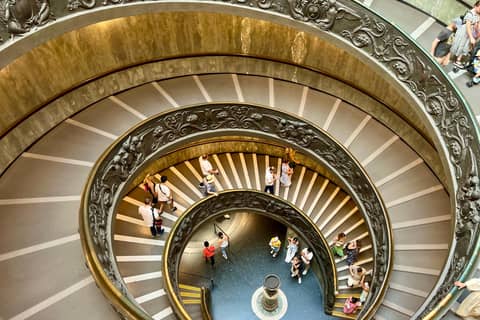
| Vatican Museums | Museum complex with Renaissance and ancient art | Entrance on Viale Vaticano; timed ticket |
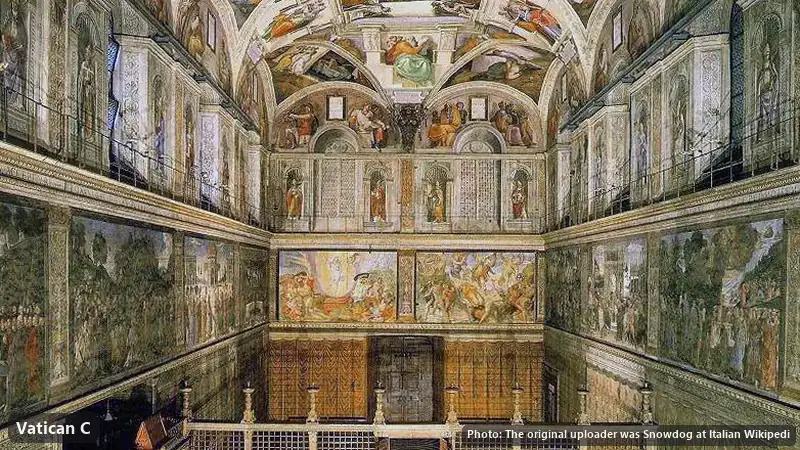
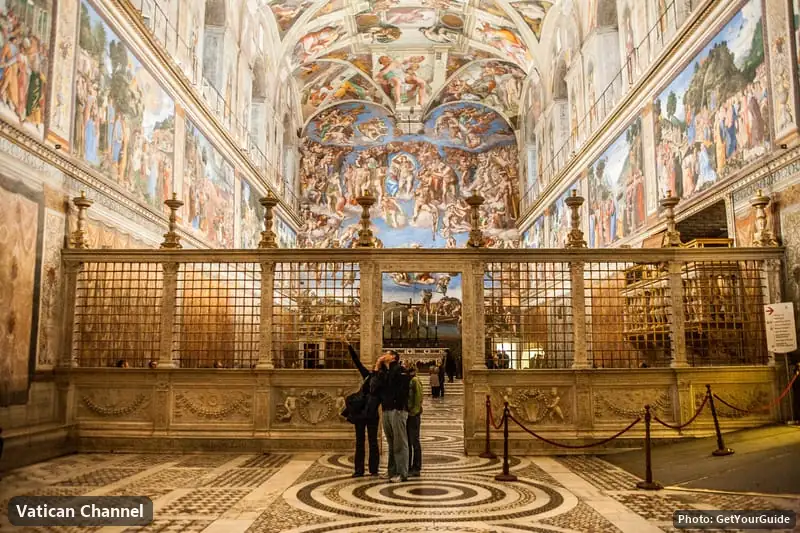
| Sistine Chapel | Michelangelo’s ceiling and The Last Judgment | Reached through the museums, not from the square |
| Apostolic Palace | Papal residence and offices | Not open for a normal visit |
| Vatican Library | Research library | Not a tourist sight |
Notice one point in that table. The Sistine Chapel is not a separate building you can walk up to. You reach it through the museums, so a museum ticket is also a chapel ticket. My page on admission to the Sistine Chapel covers that route in detail.
A traveler on the basilica’s Google Maps page said there was already a line at 6:45 am but that it moved quickly, and that you can see most of the free interior in about 40 minutes.
“Do not miss this place for a FREE location! This is the most beautiful church I've ever been to. Once your through security and the main doors, you are truly hit by the size and artwork. We got there 645am and already there's a line but got in very quickly. If your just there for free visit, you can see most of it in 40mins. Pay extra for the other locations.”
The basilica’s own website is the place to confirm hours, and the Vatican Museums site is the place for museum opening days.
 Most booked this week: Rome: Vatican Museums, Sistine Chapel and Basilica Access, from $68See prices →
Can anyone visit the Vatican?
Anyone can visit the Vatican in its open areas, and you do not need a visa for the state itself. The basilica is free, and the museums need a ticket. What you do need is time and the right clothes.
The square and the basilica are the easy part. For the museums, my advice is to book a timed slot, because walk-up lines can be long. One Google Maps reviewer wrote that buying tickets was a struggle, so they arrived near 5 pm, waited 30 to 40 minutes and then had to rush the galleries before closing. I would not copy that plan.
“Truly amazing. The photos you see online don’t do the place justice. Just standing in the halls admiring some of Ancient Greek/Ancient Rome/renaissance/baroque masterpieces is beyond words. Definitely worth going too. Getting tickets online is a nightmare, so we turned up at roughly 17:00 and waited for 30/40mims to get tickets. We managed to get round the gallaries before closure, but it was a bit of rush.”
Google Maps data lists the museums as closed on Sundays and open 8 am to 8 pm on the other days. That is a listing, not a promise, so confirm the day you want on the museum site. The basilica is listed as open daily from 7 am to 7:10 pm, with the same caution. For the full rules, see who can enter Vatican City.
Best value pick: Vatican: Museums & Sistine Chapel Entrance Ticket, from $36View dates →How to get there from central Rome
Getting there from central Rome is easy on foot, by metro or by bus. The nearest metro stop for the museums is Ottaviano on Line A, and one tour provider’s meeting-point notes say the stop is about a 10-minute walk from their office.
For the basilica, aim for Piazza San Pietro, which is the address Google Maps lists. For the museums, aim for Viale Vaticano. Mixing these up is the most common mistake I see in the booking notes, because the two entrances are far apart. One tour provider even warns that St. Peter’s Square is not its meeting point.
If you are coming from the center of Rome, my guide to getting to Vatican City has the routes in order.
Going with family? Vatican Museums, Sistine Chapel & St. Peter's Basilica Tour, from $60Compare tickets →Tickets and tours for the city-state
Vatican tickets and tours work best as a timed ticket for the museums and the Sistine Chapel, with the basilica added on its own. I’d book the museums ahead and treat the basilica as a separate, free stop.
One GetYourGuide option is the Vatican Museums and Sistine Chapel entrance ticket. It lists skip-the-ticket-line entry, an audio guide if you pick that option and the booking fee, and it excludes a guided tour and the basilica dome. Its meeting notes say to go to the entrance on Viale Vaticano, show your ticket and not arrive outside your assigned time slot.
If you would rather have a guide, the guided options add the Sistine Chapel and sometimes the basilica. Prices on GetYourGuide currently run from about $32 for an entrance-only option to about $71 for a guided museums, chapel and basilica tour. Those figures change, so check the live page before you book.
Vatican: Museums & Sistine Chapel Entrance Ticket
Powered by GetYourGuide · affiliate link
Vatican Museums, Sistine Chapel & St. Peter's Basilica Tour
Powered by GetYourGuide · affiliate link
Rome: Vatican Museums, Sistine Chapel & Basilica Tour
Powered by GetYourGuide · affiliate link
Rome: Vatican Museums & Sistine Chapel Skip-The-Line Ticket
Powered by GetYourGuide · affiliate link
A review of the entrance ticket said it was good value, and a visitor travelling with a child in a wheelchair used an audio guide instead of a guided tour and still saw most of the sights.
“We were unable to do this with a guide due to my child being in a wheelchair. We did the tour on our own with an audio guide. The Vatican was beautiful and we did get to see most of the sights”
If you are still comparing options, the Vatican tickets page lists the ticket types side by side. I also keep a plain checklist for do you need tickets for Vatican City if you want the yes-or-no answer first.
I am an independent guide, not the official ticket office. The official museum site is where to confirm prices, hours and closures.
Want a closer look? Rome: Vatican Museums, Sistine Chapel & Basilica Tour, from $71See times →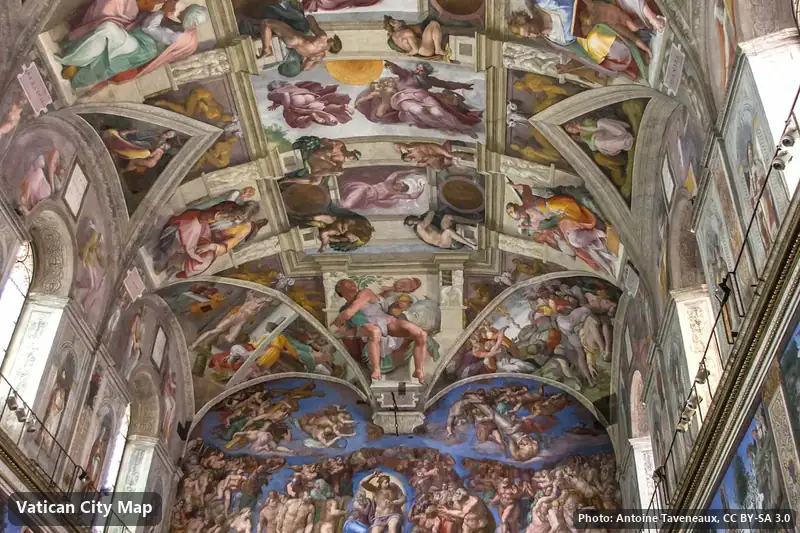
Is there anyone guarding the Vatican?
The Pontifical Swiss Guard protects the pope and the state. The official page says the guard forms a company with the rank of regiment, with an effective strength of 135, made up of officers, non-commissioned officers and 85 halberdiers.
According to the official structure page, the commander is Colonel Christoph Graf and the vice commander is Lieutenant Colonel Loïc Marc Rossier. You will most often spot the guards near the entrances to the Apostolic Palace and the basilica. They are on duty, so don’t ask them to pose or block the door.
Skip the ticket line: Rome: Vatican Museums & Sistine Chapel Skip-The-Line Ticket, from $32Check dates →What should you know before you go?
Before you go, a few practical points save the most time. First, remember that the entrance you need depends on the sight. Second, allow plenty of time, because the museums are large and the Sistine Chapel sits at the end of the route.
- Pick the entrance first. Basilica at the square, museums on Viale Vaticano.
- Arrive on time. Several providers say your slot is fixed and latecomers may not get skip-the-line entry.
- Plan for security. Both the basilica and the museums have security checks, so leave bulky bags behind.
- Dress for a church. The basilica is an active place of worship, and I’d cover shoulders and knees to avoid being turned away.
- Check closures. Public holidays and papal events can close sections, so check the official calendar.
The tour data also hints at one trap. Some providers say you will receive the basilica ticket separately or not at all, and some travelers asked for clearer directions. Read the inclusions list before paying, and keep your confirmation open on your phone.
Short on time? Vatican Museums & Sistine Chapel Skip-the-Line Entry Ticket, from $53Book a slot →Vatican C: final planning tips
Vatican C planning tips start from reading it as Vatican City, a small state with big queues, so decide your goal first. If you want the art, book a museums and Sistine Chapel slot. If you want the church, go early and use the free basilica entrance.
My advice is to book the museums in advance, check hours on the official sites and leave the basilica for a different part of the day. When you are ready to choose, where to buy Vatican tickets? is the place to compare the options. For the bigger picture, the Vatican guide and the About Vatican City hub cover everything else on this site.
Last, use the euro for any souvenir shopping on Via della Conciliazione, and keep your plans loose. A short, well-timed visit beats a rushed full day.
Prefer a guide? Rome: Vatican Museums, Sistine Chapel and Basilica Access, from $68See tours →Top-rated Vatican tickets and tours
Vatican: Museums & Sistine Chapel Entrance Ticket
Powered by GetYourGuide · affiliate link
Vatican Museums, Sistine Chapel & St. Peter's Basilica Tour
Powered by GetYourGuide · affiliate link
Rome: Vatican Museums, Sistine Chapel & Basilica Tour
Powered by GetYourGuide · affiliate link
Frequently asked questions
Where is Vatican City located?
Vatican City is a landlocked enclave inside the city of Rome, Italy. Wikidata lists its coordinates as 41.90400, 12.45300, on the west bank of the Tiber, so you can reach it on foot from central Rome.
Is the Vatican a republic?
No. Wikipedia describes Vatican City as an absolute monarchy under the pope, who is elected by the College of Cardinals. The pope delegates authority to the Pontifical Commission for Vatican City State.
Can you provide a map of Vatican City?
The state is so small that one map covers it, and the two sights most visitors want sit on opposite sides. St. Peter's Basilica faces Piazza San Pietro, while the Vatican Museums entrance is on Viale Vaticano. The Google Maps links in the place cards on this page open both.
Is Vatican City a country?
Yes. It is a sovereign city-state and the smallest country by area and by population. The Holy See maintains diplomatic relations with 180 states and is an observer state of the United Nations.
What currency and language does Vatican City use?
Vatican City uses the euro and issues its own euro coins. Wikidata lists Italian and Latin as its official languages.
Keep planning your visit
More About Vatican City guides
Online Vatican Tickets is an independent visitor guide. Prices and hours change: check the official Vatican Museums website before you go. Tour links are GetYourGuide affiliate links.