In this guide ▾
The papal see is one of those phrases people use daily and rarely define. It sounds like a place, yet it names an office, and that office is not the same as the small state next to St. Peter’s Square. This page explains what the papal see is, how it relates to Vatican City, who runs it, and how a traveler can see it at work in Rome.
I write this as an independent guide, not an official body. I rely on Wikipedia, Wikidata and the official Vatican pages I link, and I tell you when I cannot confirm a detail.
What Is the Papal See?
The papal see is another name for the Holy See, the see of the Bishop of Rome. Wikipedia calls it the central governing body of the Catholic Church and Vatican City, covering the office of the pope and serving as the spiritual and administrative authority of the worldwide Catholic Church (Holy See on Wikipedia).
It goes by several names. The same article lists the See of Rome, the Petrine See and the Apostolic See. Under international law, the Holy See holds the status of a sovereign juridical entity.
According to Catholic historical records and tradition, it was founded in the first century by Saint Peter and Saint Paul. Because of the doctrines of Petrine and papal primacy, it is the focal point of full communion for Catholics around the world. If you want the shorter name explained, my page on the Holy See covers it directly.
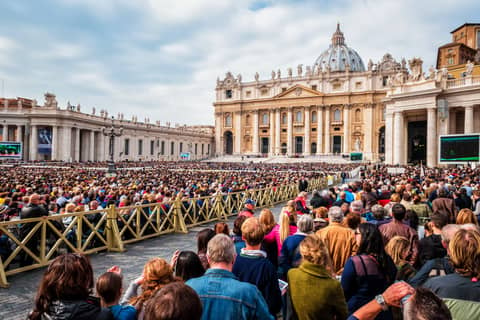 Want a closer look? Rome: Papal Audience with Pope Leo XIV & Expert Guide, from $35See times →
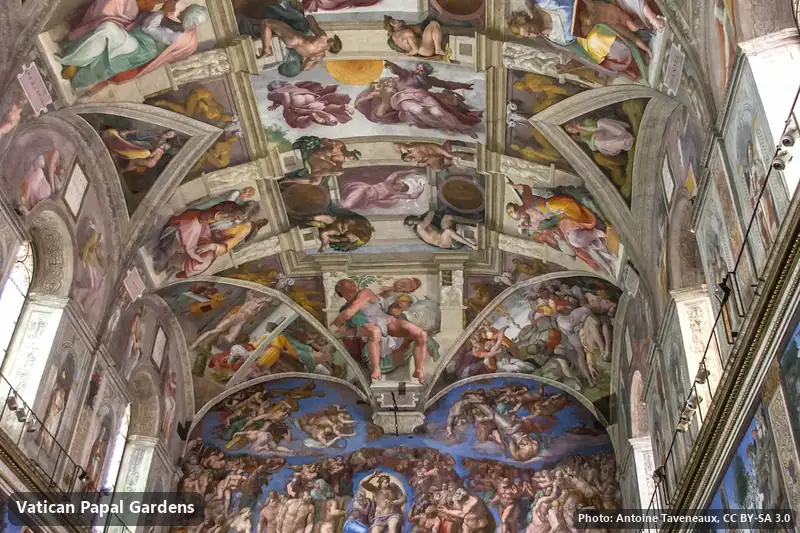
Why Is It Called a See?
A see is a seat, and the word is Latin in origin. Wikipedia explains that “see” derives from the Latin sedes, meaning seat, and points to the episcopal throne, or cathedra.
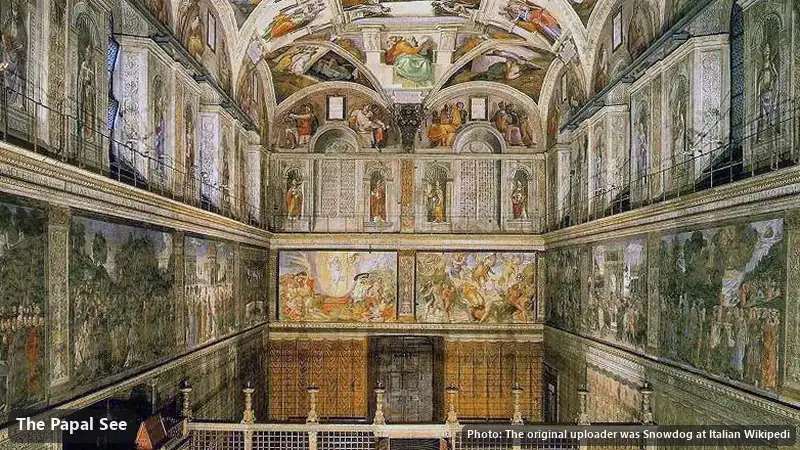 Book aheadVatican Museums & Sistine Chapel Skip-the-Ticket-Line TourCheck availability · from $110
The term “Apostolic See” can refer to any see founded by one of the Twelve Apostles. Used with the definite article, it refers specifically to the see of the Bishop of Rome, whom the Church considers the successor of Saint Peter. In the Catholic Church, only the see of the pope may be addressed symbolically as “holy.”
That explains the odd phrase “the papal see.” It is a way of pointing to the pope’s seat of authority, not to a building. My related pages on the Holy See of Rome and the Holy See and the Vatican approach the same idea from slightly different angles.
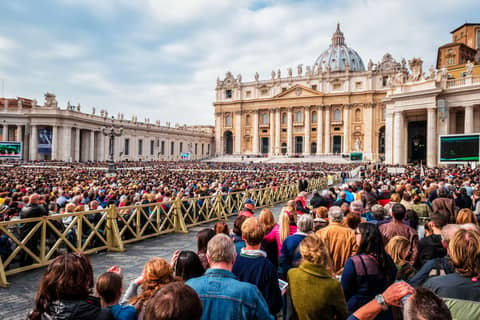 Skip the ticket line: Rome: Escorted Papal Audience Experience with Entry Ticket, from $22Check dates →
Is the Papal See the Same as Vatican City?
The papal see and Vatican City are not the same, but they are two different things that work together. The Holy See is the governing body, while Vatican City is the city-state it governs.
The table lays out the difference using Wikipedia’s descriptions.
| Point | The Holy See (papal see) | Vatican City |
|---|---|---|
| What it is | Central governing body of the Catholic Church and Vatican City | Landlocked sovereign city-state enclaved in Rome |
| Legal status | Sovereign juridical entity under international law | Sovereign state, established in 1929 |
| Led by | The pope, as Bishop of Rome | The pope, as elected monarch and head of state |
| Founded | First century, per Catholic tradition | By the Lateran Treaty of 1929 |
| Diplomacy | Bilateral relations with 180 states | Represented diplomatically by the Holy See |
| Official website | vatican.va | vaticanstate.va |
The Lateran Treaty of 1929 was agreed between the Holy See and the Kingdom of Italy to ensure the temporal, diplomatic and spiritual independence of the papacy, according to the same Wikipedia article. As a result, papal nuncios, the papal diplomats, are recognized as representing the Holy See and not the Vatican City State.
In everyday talk the two are mixed up, and Wikipedia notes that the Holy See is often referred to metonymically as “the Vatican.” For the geography side, see my pillar guide to the Vatican church and my notes on how to see the Vatican.
 Short on time? Vatican: St. Peter's Basilica, Dome Climb & Papal Tombs Tour, from $19Book a slot →
How Is the Papal See Run?
The papal see is run by the Roman Curia, the central institution that assists the pope. Wikipedia notes that the Curia includes dicasteries, comparable to ministries, and that the Cardinal Secretary of State is its chief administrator.
A few other points help you read news about it:
- Elections. Papal elections are carried out by members of the College of Cardinals.
- Diplomacy. The Holy See signs concordats and treaties, and performs multilateral diplomacy with bodies such as the United Nations, the Council of Europe and the European Union.
- Church structure. The Catholic Church is composed of the Latin Church and 23 other particular churches or rites, and the Holy See acts as the arbiter of relations between them.
- Headquarters. It is headquartered in, and exercises “exclusive dominion” over, Vatican City.
One office is especially useful to visitors. The Prefecture of the Papal Household, a Roman Curia office, organizes the public, special and private audiences of the pope and arranges visits, according to its official profile (Prefecture of the Papal Household profile). It is headed by a Prefect, assisted by a Regent, both appointed by the pope for a term of five years.
 Prefer a guide? Vatican Museums & Sistine Chapel Skip-the-Ticket-Line Tour, from $110See tours →
Where Is the Real Cathedral of the Papal See?
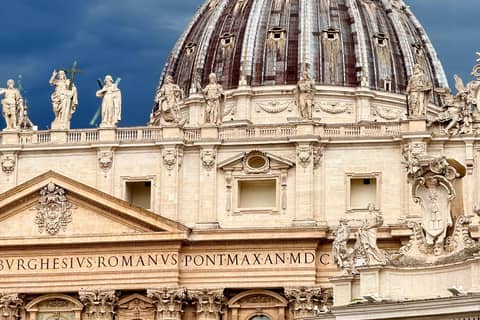
The cathedral of the papal see is the Archbasilica of Saint John Lateran in Rome, not St. Peter’s. Wikipedia observes that St. Peter’s Basilica in Vatican City is perhaps the church most associated with the papacy, yet the Lateran holds the cathedral role.
This often surprises visitors. St. Peter’s is where most tourists go, and it is regarded as one of the holiest Catholic shrines, but the pope’s cathedral as Bishop of Rome is elsewhere in the city. If you want to understand the ranks of Rome’s great churches, my page on the papal basilica explains the four major papal basilicas.
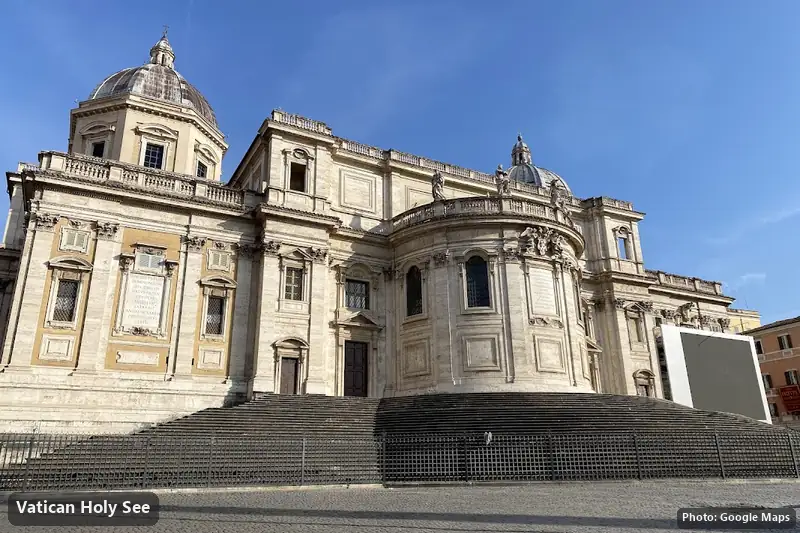
The map block shows the main sites you can visit, including Saint Mary Major, one of those four.
Saint Peter’s Basilica
Basilica · ★ 4.8 · 185,703 Google reviews
Piazza San Pietro, 00120 Città del Vaticano, Vatican City
Opening hours
- Friday7 am–7:10 pm
- Monday7 am–7:10 pm
- Saturday7 am–7:10 pm
- Sunday7 am–7:10 pm
- Thursday7 am–7:10 pm
- Tuesday7 am–7:10 pm
- Wednesday7 am–7:10 pm
Papal Basilica of Saint Mary Major
Basilica · ★ 4.8 · 58,981 Google reviews
P.za di Santa Maria Maggiore, 00100 Roma RM, Italy
Opening hours
- Friday7 am–6:30 pm
- Monday7 am–6:30 pm
- Saturday7 am–6:30 pm
- Sunday7 am–6:30 pm
- Thursday7 am–6:30 pm
- Tuesday7 am–6:30 pm
- Wednesday7 am–6:30 pm
Vatican Museums
Art museum · ★ 4.6 · 213,480 Google reviews
00120 Città del Vaticano, Vatican City
Opening hours
- Friday8 am–8 pm
- Monday8 am–8 pm
- Saturday8 am–8 pm
- SundayClosed
- Thursday8 am–8 pm
- Tuesday8 am–8 pm
- Wednesday8 am–8 pm
Sistine Chapel
Catholic church · ★ 4.7 · 98,723 Google reviews
00120 Città del Vaticano, Vatican City
Opening hours
- Friday8 am–8 pm
- Monday8 am–8 pm
- Saturday8 am–8 pm
- SundayClosed
- Thursday8 am–8 pm
- Tuesday8 am–8 pm
- Wednesday8 am–8 pm
St. Peter’s Basilica and Saint Mary Major are both listed with ratings of 4.8 stars. The basilica in Vatican City is listed open from 7 am to 7:10 pm daily, while Saint Mary Major lists 7 am to 6:30 pm. The Vatican Museums and the Sistine Chapel are listed Monday to Saturday from 8 am to 8 pm and closed on Sundays.
 Planning ahead? Rome: St. Peter's Basilica, Papal Tombs, and Dome Climb Tour, from $60Check availability →
How Can You See the Papal See in Person?
Seeing the papal see in person works in three ways: by visiting the sites linked to the papacy, by attending a papal audience, or by taking a guided tour that explains the Church’s structure. Each has its own planning needs.
Papal Audiences
A papal audience is the most direct way to see the pope. The listings I reviewed feature an escorted audience experience with a guide, and another with a licensed tour leader and headsets. The inclusions state that tickets are free of charge and that the booking covers reservation, pick-up and escort.
One listing lists a meeting point 30 minutes before the scheduled time, on Via della Conciliazione, with small groups of 20 people or fewer. Another says travelers appreciate helpful guides who ease entry and often secure seats with close views, though some want clearer details on what the fee covers compared to the free tickets.
That last point is worth reading twice. If a ticket is free, the fee you pay covers the service around it, such as the guide, the escort and the logistics. Decide whether that service is worth the cost to you.
For dates and rules, the official source is the Prefecture of the Papal Household. The brief I work from has no audience schedule, so I cannot tell you which Wednesday has one. Check the official pages before you travel, and read my guide on how to see the Vatican for the wider planning.
Tours That Explain the Papal Heritage
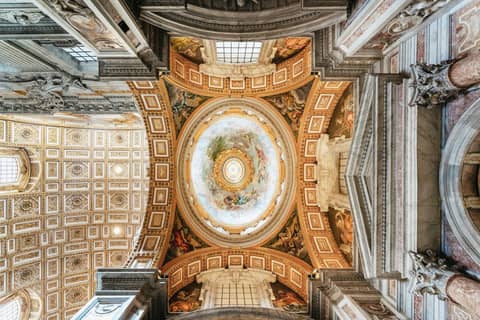
Tours of the papal heritage show many of the objects tied to the papacy when you join a guided basilica visit. One listing I reviewed covers the Chair of St. Peter, described as a relic symbolizing the authority of the papacy, along with the Papal Crypt, the Tomb of St. Peter, Michelangelo’s Pietà and Bernini’s Baldachin.
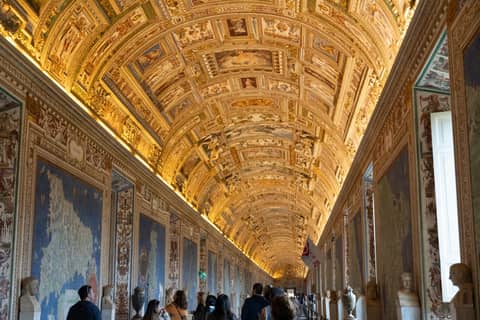
The museums and the Sistine Chapel add the other half of the story. Wikipedia says the Sistine Chapel is the site of the papal conclave, where a new pope is chosen. A guided museum tour is a good way to learn how the artwork links to the papacy.
Rome: Papal Audience with Pope Leo XIV & Expert Guide
Powered by GetYourGuide · affiliate link
Rome: Escorted Papal Audience Experience with Entry Ticket
Powered by GetYourGuide · affiliate link
Vatican: St. Peter's Basilica, Dome Climb & Papal Tombs Tour
Powered by GetYourGuide · affiliate link
Vatican Museums & Sistine Chapel Skip-the-Ticket-Line Tour
Powered by GetYourGuide · affiliate link
Reviewers of the basilica tour praise knowledgeable guides who bring the art and history to life, and some ask for clearer details on dome access and wait times. One of them wrote:
“Very nice tour. I enjoyed the explanations given by our guide, very nice and friendly guide. Thank you”
A reviewer of the guided museum tour valued skipping the queue and a good guide:
“Fantastic. Worth the money in skipping the queue. Valentina was a wonderful guide”
If you would rather compare every option in one place before you pick, my homepage lets you check Vatican tickets and prices side by side.
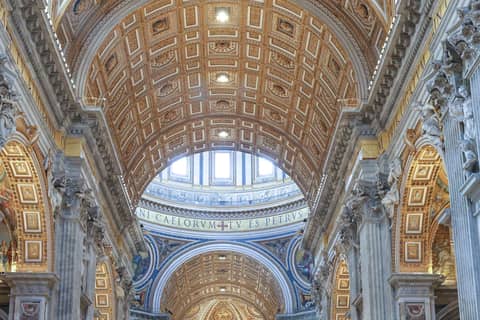 Most booked this week: Rome: St. Peter’s Basilica, Pietà & Papal Tombs Tour, from $22See prices →
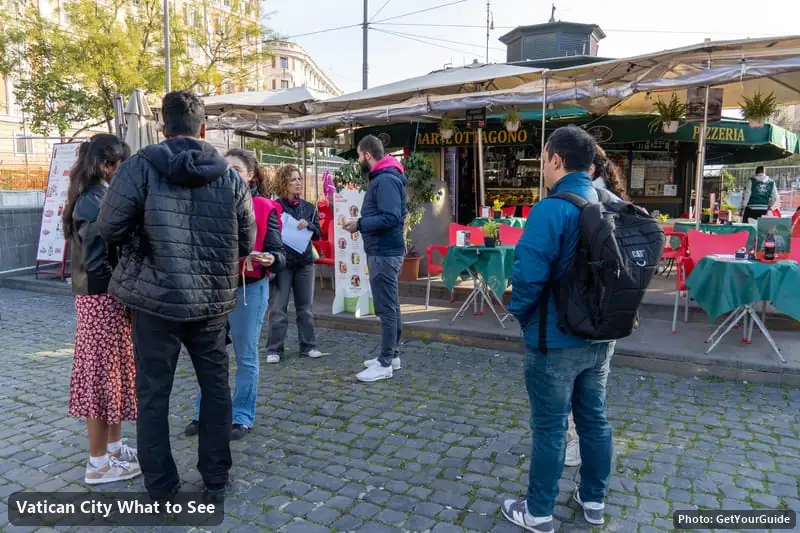
What Else Is Worth Seeing Near the Vatican?
Sights near the Vatican worth your spare time include the Castel Sant’Angelo, a common pairing with the Vatican. Two listings I reviewed offer entry with an audio guide or app, priced at 35.66 and 24.51 US dollars, and travelers praise the views. One reviewer suggests downloading the app before you arrive because the signal is poor at the castle.
The Vatican Museums are worth planning as their own outing, with a booked time slot, and the official site is the place to check hours and ticket rules.
Best value pick: Rome: Papal Audience with Pope Leo XIV & Expert Guide, from $35View dates →What Is the Largest Catholic Church in the World?
The largest Catholic church in the world by interior measure is St. Peter’s Basilica, according to Wikipedia. It is a church of the Italian Renaissance in Vatican City, and it is regarded as one of the holiest Catholic shrines. My guide to St. Peter’s Basilica goes through its history and visiting rules.
For beauty, taste varies, and I cannot rank churches objectively. What I can report is how visitors rate them. The place listings show St. Peter’s Basilica at 4.8 stars from more than 185,000 reviews and the Papal Basilica of Saint Mary Major at 4.8 stars from more than 58,000.
Both are worth a visit, and they show two sides of the papacy: the Vatican church that draws the crowds and a major basilica across the city with a calmer feel.
Going with family? Rome: Escorted Papal Audience Experience with Entry Ticket, from $22Compare tickets →The Papal See by the Numbers
The papal see by the numbers is a short list, since few figures describe an office and the useful ones belong to the state it governs. Below is what Wikidata records, and what each figure means for your visit.
- Area: 0.44 km². Vatican City is tiny, so the main sites are a short walk apart.
- Population: 949 people in 2024. Almost everyone you see on the square is a visitor.
- Inception: 1929-02-11, the date the Lateran Treaty era created the city-state.
- Currency: the euro, so you pay official fees in euros.
- Official languages: Latin for the Holy See, and Italian and Latin for Vatican City. Expect signs mostly in Italian.
- Head of state: Leo XIV, the pope you would see at an audience.
Want a closer look? Vatican: St. Peter's Basilica, Dome Climb & Papal Tombs Tour, from $19See times →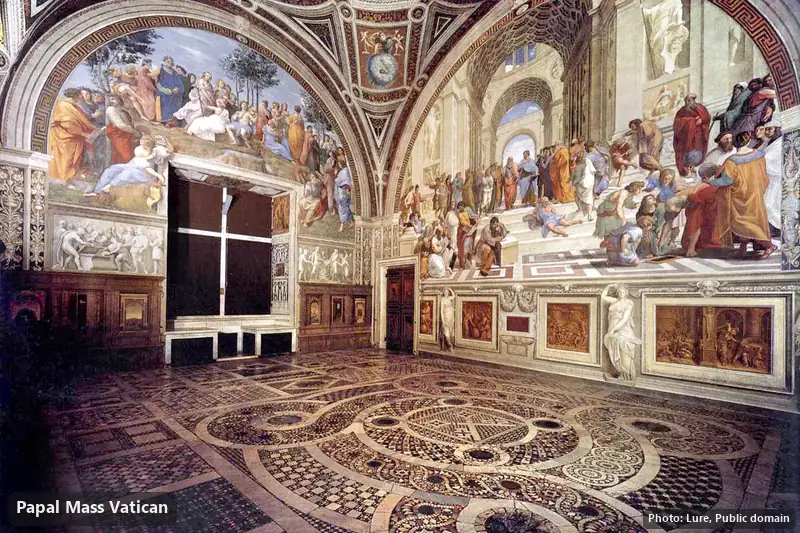
What the Holy See Is Not
What the Holy See is not is worth spelling out, because a few clarifications save confusion when you read about it.
- It is not a building. A see is a seat of authority, and the Holy See has no single address, though it is headquartered in Vatican City.
- It is not the whole Church. The Holy See is the central governing body, while the Church includes the Latin Church and 23 other particular churches or rites.
- It is not the same as the city-state. Vatican City was established by the Lateran Treaty of 1929, and the Holy See exercises exclusive dominion over it.
- It is not only the pope. The Roman Curia, its dicasteries and the Cardinal Secretary of State all take part in running it.
These points explain why the same pages talk about both an office and a place. A visitor can walk into the place, but the office is something you learn about through what the place contains.
Skip the ticket line: Vatican Museums & Sistine Chapel Skip-the-Ticket-Line Tour, from $110Check dates →Practical Tips for Visiting Papal Sites
Practical tips for visiting papal sites come down to a few habits that make any trip easier. They apply to the basilica, the museums and papal events alike.
- Check the official source. Prices, hours and audience dates change, so confirm them close to your trip. For example, the Vatican Museums price page lists a full ticket at EUR 20.00 without online booking, about $22.33 at the ECB reference rate of 2026-11-06.
- Dress for a place of worship. Shoulders and knees should be covered at the main sites.
- Arrive early at meeting points. One listing asks you to be there 30 minutes before the tour.
- Read inclusions carefully. Free tickets and paid services are not the same thing.
- Keep your confirmation handy. Save vouchers on your phone and in print.
My hub on the Pope and the Holy See collects more of these guides in one place.
Short on time? Rome: St. Peter's Basilica, Papal Tombs, and Dome Climb Tour, from $60Book a slot →Final Thoughts on the Papal See
The papal see is the office and authority of the Bishop of Rome, while Vatican City is the small state where that authority is based. Keep that distinction in mind and most news stories, signs and ticket pages make more sense.
For travelers, the practical path is simple: see St. Peter’s, learn that the Lateran is the cathedral, and consider a papal audience if the dates fit. It is easier to understand when you stand in the places that carry its history.
Prefer a guide? Rome: St. Peter’s Basilica, Pietà & Papal Tombs Tour, from $22See tours →Top-rated Vatican tickets and tours
Rome: Papal Audience with Pope Leo XIV & Expert Guide
Powered by GetYourGuide · affiliate link
Rome: Escorted Papal Audience Experience with Entry Ticket
Powered by GetYourGuide · affiliate link
Vatican: St. Peter's Basilica, Dome Climb & Papal Tombs Tour
Powered by GetYourGuide · affiliate link
Frequently asked questions
Is Holy See another name for Vatican City?
Not exactly. The Holy See is the central governing body of the Catholic Church and Vatican City, while Vatican City is the city-state established by the Lateran Treaty of 1929. The two are often confused, but the Holy See holds sovereign status under international law.
What does see mean in the Holy See?
The word see comes from the Latin sedes, meaning seat, and refers to the episcopal throne or cathedra. Used with the definite article, the Holy See means the see of the Bishop of Rome, whom the Church considers the successor of Saint Peter.
Where is the actual cathedral of the papal see?
It is the Archbasilica of Saint John Lateran in Rome, not St. Peter's. Wikipedia notes that St. Peter's Basilica is the church most associated with the papacy, but the Lateran is the actual cathedral of the Holy See.
How can I see the Pope on a Wednesday?
Tour operators sell escorted papal audience experiences, and the listings I reviewed say the tickets are free of charge, with the fee covering a guide and arrangements. Confirm dates with the official Prefecture of the Papal Household, which organizes the public audiences.
How many countries does the Holy See have relations with?
Wikipedia says the Holy See maintains bilateral diplomatic relations with 180 sovereign states. It also takes part in multilateral diplomacy with organizations such as the United Nations.
Keep planning your visit
More The Pope & Holy See guides
Online Vatican Tickets is an independent visitor guide. Prices and hours change: check the official Vatican Museums website before you go. Tour links are GetYourGuide affiliate links.